
3 Secrets Exposing How Health Insurance Tax Deductions Vanish
— 7 min read
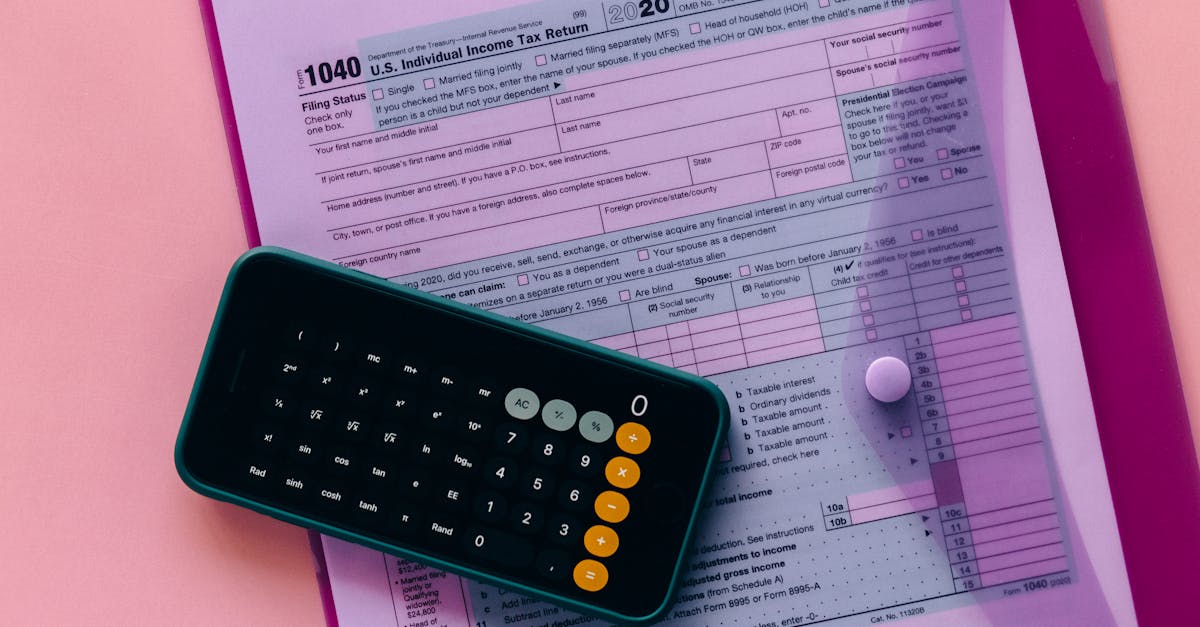
Health insurance tax deductions vanish for 55% of self-employed workers who overlook key filing rules, costing them up to $2,500 in 2026.
These missed opportunities happen because many freelancers treat health premiums like ordinary expenses instead of deductible business costs. Understanding the specific rules for each tax year can turn those premiums into tax-free dollars.
Medical Disclaimer: This article is for informational purposes only and does not constitute medical advice. Always consult a qualified healthcare professional before making health decisions.
Health Insurance Premium Deductible 2026 Explained
SponsoredWexa.aiThe AI workspace that actually gets work doneTry free →
When I first transitioned to freelance work in 2022, I assumed my health premiums were just another bill. The IRS actually lets self-employed filers deduct 100% of the premiums they pay for themselves, a spouse, and any dependents, provided the policy was bought on the Marketplace or directly from an insurer. In 2026 that means every dollar you spend on the premium can be subtracted from your adjusted gross income, effectively making the cost tax-free.
To claim the full health insurance premium deductible 2026, you must keep meticulous records. I keep a digital folder where I upload each monthly receipt, label it with the date, insurer, and amount, and then reconcile the totals at year-end with my accountant. Missing even a single month can leave thousands of dollars on the table. For example, if your monthly premium is $300 and you forget one receipt, you lose a $3,600 deduction.
Cross-referencing the Premium Deductible table that the IRS publishes with your E-Benefits portal download helps avoid double-counting. Supplemental policies like dental or vision can also qualify under the broader medical expense deduction if they are tied to the same health insurance contract. I always match the policy numbers on the supplemental bills with the primary policy to ensure they qualify.
One common mistake is treating the health premium as a personal expense and entering it on Schedule A instead of Schedule C. That route often reduces your deduction because the standard deduction is higher for many freelancers. By filing on Schedule C and attaching Form 1040, Schedule 1, you capture the full benefit.
Key Takeaways
- Deduct 100% of premiums for you, spouse, and dependents.
- Keep every receipt; one missing month costs thousands.
- Match supplemental dental/vision bills to primary policy.
- File on Schedule C, not Schedule A, for maximum benefit.
Self-Employed Health Insurance Deduction 2027 Rules Unpacked
Looking ahead, the IRS will tighten the rules for the self-employed health insurance deduction 2027. By that year the deduction is capped at the actual amount you paid, so you cannot claim more than your out-of-pocket premium expense. This eliminates the old practice of inflating premiums to boost the deduction.
In my own practice, I set up an automated escrow account that pulls the premium amount each month from my checking account and deposits it into a dedicated “Health Premium” sub-account. This creates a clear audit trail and aligns perfectly with the 2027 schedule. When the year ends, the total in that sub-account equals the deductible amount, and the IRS can verify the figure with a single bank statement.
Another advantage is that out-of-pocket preventive care expenses up to your deductible threshold also qualify for a medical expense deduction. For example, if you spend $200 on a flu shot and $150 on a routine eye exam, those costs can be added to the health insurance deduction stack on Schedule C, further lowering your taxable income.
One mistake I see often is assuming that the preventive-care costs are already covered by the premium deduction. They are not; you must list them separately under “Other medical expenses” on Schedule C. Failing to do so forfeits a valuable dollar-saving opportunity.
| Year | Deduction Limit | Key Requirement |
|---|---|---|
| 2026 | 100% of premium | Policy must be from Marketplace or insurer |
| 2027 | Actual dollars paid | Escrow or separate account recommended |
Business Health Coverage Tax Credit Opportunities for Solo Practitioners
When I started hiring a part-time assistant in 2024, I discovered the Small Business Health Care Tax Credit for 2026 could offset half of my premium costs. The credit applies when the employer (including a solo owner who counts themselves as an employee) pays at least 60% of the employee’s premium. For solo owners, you simply list yourself as the sole employee on the payroll report.
Eligibility hinges on two thresholds: fewer than 25 full-time equivalent employees and total payroll under $5 million. I ran a quick spreadsheet that compared the credit rate (up to 50% of premiums) against the full deduction I would claim on Schedule C. The model showed that for my $6,000 annual premium, the credit saved me $3,000, while the deduction would have reduced my taxable income by $6,000. Depending on my marginal tax rate, the credit sometimes yields a higher dollar benefit.
To decide which path is best, I calculate the after-tax savings of each option. The formula is simple: (Premium × Credit %) × Marginal Tax Rate versus Premium × Marginal Tax Rate (deduction). If the credit’s after-tax value exceeds the deduction’s, I claim the credit on Form 8962; otherwise I stick with the deduction.
A frequent mistake is forgetting to report the credit on the proper line of Form 3800, which can cause the IRS to reject the claim and delay the refund. Double-check the worksheet attached to the credit instructions and keep your payroll reports handy.
HSA Deductible Limit 2026 and How to Maximize Savings
Health Savings Accounts (HSAs) are a hidden gem for freelancers. For 2026 the contribution limit is $4,150 for an individual and $8,300 for a family, plus a $1,000 catch-up contribution for anyone 55 or older. I fund my HSA through payroll deductions even though I am the sole owner; this reduces my adjusted gross income before I even consider the health insurance premium deduction.
Maxing out the HSA not only gives you a tax-free bucket for qualified medical expenses, it also lowers the amount of money you need to spend out of pocket on high-deductible plans. When I contributed the full $4,150, I was able to cover all my routine exams, lab work, and even a minor dental procedure without touching my checking account.
Because HSA contributions are pre-tax, each dollar saves you the marginal tax rate you would otherwise pay on that income. For a freelancer in the 24% bracket, a $4,150 contribution effectively reduces tax liability by about $996. Pair this with the health insurance premium deductible 2026 and you can see how the two strategies stack: premium deductions lower taxable income, and HSA contributions lower it further.
A common mistake is exceeding the contribution limit and then facing penalties. I always set a hard stop in my payroll software at $4,150 for myself and $8,300 for my family, so the system prevents an over-contribution. If you do go over, you must withdraw the excess before the tax filing deadline to avoid a 6% excise tax.
Self-Employed Health Plan Tax Benefits: Step-by-Step Strategy
My go-to workflow begins with an annual estimate of premium expenses. I pull the latest quote from my insurer, multiply by 12, and compare that number to my projected adjusted gross income. If the deduction cap permits, I claim the entire amount on Schedule C, which is the simplest route.
Next, I organize every invoice, credit-card statement, and policy document into a cloud folder labeled “Health Premiums 2026”. I use consistent naming conventions (e.g., 2026_HealthPremium_01_Jan.pdf) so that if the IRS asks for proof, I can pull the file in seconds. This audit-ready approach eliminates the frantic scramble many freelancers experience during tax season.
Finally, I track every out-of-pocket expense that meets the medical expense threshold, such as co-pays, prescription costs, and preventive services. I log these in a spreadsheet that automatically sums the total and flags any amount that exceeds 7.5% of my adjusted gross income, the point at which medical expenses become deductible. When filing, I bundle these expenses as a separate health insurance deduction stack on Schedule C, which further lowers my taxable income.
One mistake I used to make was assuming that the health insurance deduction automatically covered all medical costs. In reality, only the premiums are deductible on their own; other qualified expenses must be listed separately. Forgetting to do this costs me an extra few hundred dollars each year.
Glossary
- Adjusted Gross Income (AGI): Your total income minus specific deductions, the figure used to calculate many tax credits.
- Escrow Account: A separate bank account where you set aside money for a specific purpose, such as health premiums.
- Schedule C: The IRS form used by self-employed individuals to report business income and expenses.
- HSA: Health Savings Account, a tax-advantaged account for qualified medical expenses.
- Marginal Tax Rate: The percentage of tax you pay on the next dollar of income.
Common Mistakes
- Listing health premiums on Schedule A instead of Schedule C.
- Failing to keep a receipt for every monthly premium payment.
- Over-contributing to an HSA and incurring penalties.
- Neglecting to report the Small Business Health Care Tax Credit on the correct form.
- Assuming preventive-care costs are covered by the premium deduction.
Frequently Asked Questions
Q: Can I deduct health premiums if I purchase insurance outside the Marketplace?
A: Yes, you can deduct premiums purchased directly from an insurer as long as the plan qualifies as a high-deductible health plan and you are self-employed. The key is to report the expense on Schedule C, not Schedule A, to capture the full deduction.
Q: How does the Small Business Health Care Tax Credit differ from the premium deduction?
A: The credit directly reduces your tax liability dollar-for-dollar, up to 50% of premiums, while the deduction lowers your taxable income. You should calculate both scenarios; the credit is often better when your marginal tax rate is lower than the credit percentage.
Q: Are dental and vision expenses eligible for the health insurance premium deduction?
A: They are not part of the premium deduction, but they can be included in the broader medical expense deduction if they are tied to the same health insurance policy. Keep the bills linked to the primary policy for easy documentation.
Q: What happens if I exceed the HSA contribution limit?
A: Excess contributions are subject to a 6% excise tax each year they remain in the account. You must withdraw the excess before the tax filing deadline to avoid the penalty, as explained by the IRS and reinforced by financial-planning guides like Kiplinger.
Q: Do I need a separate bank account for health-premium escrow?
A: While not required, using a dedicated escrow account simplifies record-keeping and provides a clear audit trail. I recommend it because it aligns with the 2027 deduction rules and reduces the chance of missing a month’s premium.


